Ancient jar over ten millennia old discovered almost intact at the bottom of a Japanese lake
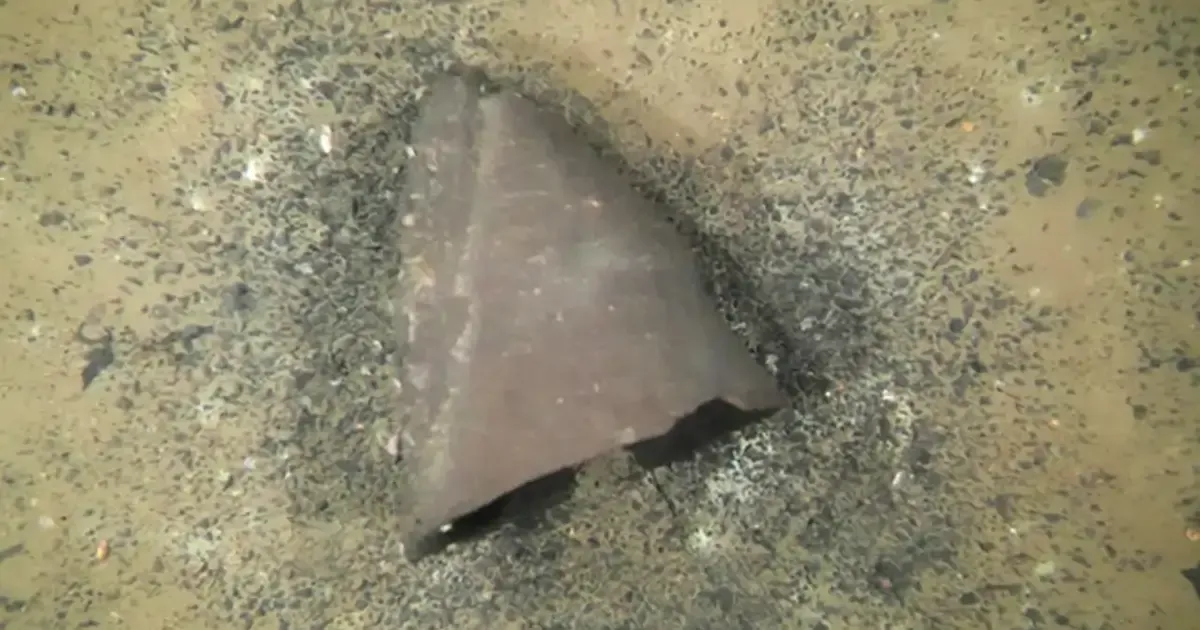
Archaeology met cutting-edge technology in a remarkable find that changes how we understand the origins of Japanese pottery. A team of Japanese researchers recovered a virtually intact pot from the bottom of Lake Biwa, dated to more than 10,000 years ago. Preserved in near-perfect condition, this piece marks a major milestone in our knowledge of early ceramic art in Japan.
A treasure submerged for millennia
Lake Biwa, Japan’s largest lake with a surface area of about 670 km², was the scene of the discovery. The pot was found at a depth of 64 metres, close to the submerged ruins of Tsuzura Ozaki (a valley-shaped depression) in Shiga Prefecture, not far from Kyoto. The artefact measures 25 cm in height and has a pointed base, a form typical of Jōmon-period pottery.
The Kansai region, which contains more than 90 submerged archaeological sites, is known for its unusual geological conditions. Tectonic movements and low sedimentation in the area have helped preserve objects on the lake bed. Finding this pot upright and undamaged goes against the usual odds of deterioration.
Technology and expertise at work
The expedition, carried out in October 2025 under the direction of the Nara National Research Institute for Cultural Properties, used state-of-the-art equipment. 3D underwater scanners and autonomous underwater vehicles (AUVs) were employed to map the lake bed precisely, even in extremely poor visibility. Developed by the National Maritime Research Institute of Japan, these tools — originally designed for inspecting submarine cables — were adapted for archaeological work and delivered data of exceptional quality, comparable with (and in some ways better than) what divers can produce.
What it tells us about culture and history
The pot belongs to the early Jōmon period, the oldest and longest-lasting era in Japanese prehistory. Jōmon ceramics are famous for their great age and stand as one of the earliest examples of systematic use of fire to make durable objects. The decorative style of the pot, linked to the Jinguji tradition, features characteristic rope-impressed patterns — which is exactly what “Jōmon” means, literally “decorated with cords”.
This find sheds light not only on ceramic craft in Japan but also on the practical, cultural and aesthetic roles ceramics played. Alongside this unique piece, the site yielded six Hagi ceramic jars from the Kofun period and more than 200 fragments of Jōmon pottery.
What’s next and further analysis
The original purpose of the pot is still unclear. Researchers are considering various possibilities: it could have been a ritual object, a container lost by a lakeside community, or evidence of human occupation before the area was submerged. Kenichi Yano of Ritsumeikan University comments: “This discovery could only have happened underwater. The preservation, the placement and the surrounding conditions provide information impossible to get from land sites.”
The Museum of Underwater Archaeology of Japan plans to put the artefact on display and create a 3D model for virtual exploration of this precious relic. Detailed analyses of the pot’s composition and use will follow, to deepen our understanding of this millennia-old heritage.
In an age when technology keeps stretching the limits of what we can learn, this underwater discovery offers a fascinating glimpse into humanity’s cultural legacy and invites history enthusiasts to rethink the origins and development of civilisation.